
The Science of Nature: Dragon's Blood
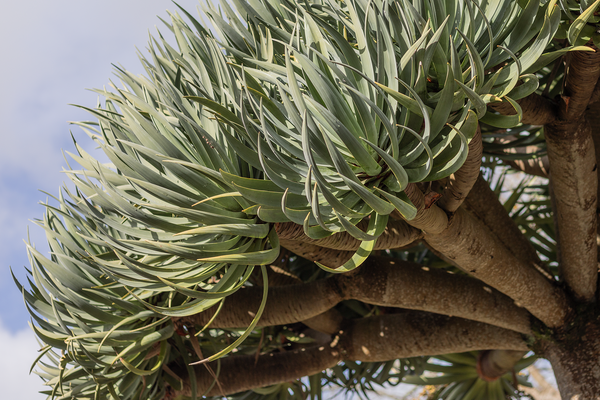
Nobody believes in dragons past the age of 8. But we do. Their spiky tips, leathery skin and magical abilities always intrigued us. Of course, we're referring to selected plants from the genus Dracaena, Daemonorops and Croton, also known as Dragon Trees.
Stab into the bark and watch the tree bleed, you monster. It's a natural resin aptly named Dragon's Blood. Dragon's Blood has been used across the world for various specialist tasks ranging from the Romans using it for red dye, to the Chinese using it to varnish furniture. It has been used in neopagan witchcraft and shamanist rituals for protection and love potions. American Hoodoo and Voodoo rituals see it turned in to incense to assist in rituals of banishment of spirits.
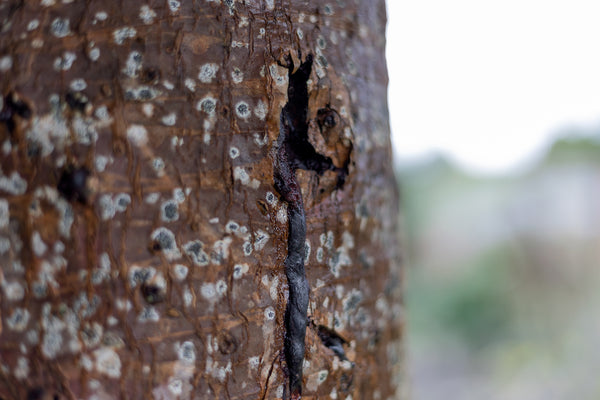
Name: Dracaena Draco or Croton Lecheri
Common Name: Sangre de Drago, Dragon Tree
Family: Dracaena / Croton
Family: Dracaena / Croton
Description:
Both species appear very similar but have different origins. Dracaena Draco originating in the subtropical North Atlantic around Morroco. Croton lecheri in the forests of South America around Peru & Ecuador. Typified by a large, even umbrella-shaped canopy of branches and leaves. The thick branchless trunk, both species have blue-green spiral leaf growth with leaves being firm sword-like shapes.
Uses:
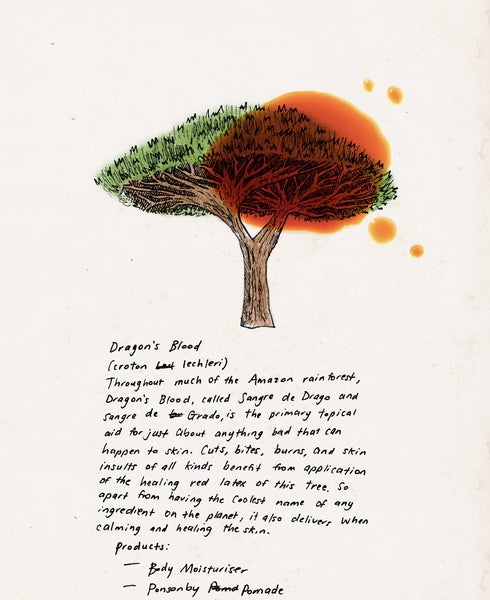
The Romans, Greeks, Arabs, Chinese and South Americans have all used Dragon's Blood to treat wounds and abrasions. It has been used to cure diarrhoea and ulcers in the mouth, throat, intestines and stomach. It has even been used as an antiviral for respiratory viruses, stomach viruses and for skin disorders such as eczema. But, we use it to calm and treat the scalp in our Ponsonby Pomade.
Get the benefits of Dragon's Blood here


Get the benefits of Dragon's Blood here


